
Name-Based Case Searches
The public TNCIS description does not reveal post-login matching rules. Do not assume partial names, date filters, or court filters behave in a fixed way. Subscribers should inspect the labeled controls after login and compare each result with the court and case number. Free Franklin County docket PDFs have no name field.
- Identify whether the matter is trial, municipal, appellate, federal district, or bankruptcy.
- Open the official system for that court and use the exact party name when a name control is available.
- Narrow results only with filters the live interface offers.
- Compare the number, court, caption, and dates before treating a result as the intended case.
| Field Label | Type | Required | Notes |
|---|---|---|---|
| Party or person name | Search key | Verify after login | TNCIS matching rules are not public. |
| Court or case type | Selector | Verify after login | Circuit and Sessions scope is advertised. |
| Date, hearing, or filing | Date filter | Verify after login | Sorting and pagination are not exposed. |
| Username and password | Credentials | Yes | Required for a subscriber. |
Franklin County TNCIS Access
The Circuit Clerk's TNCIS page advertises a broad case-information layer for Circuit and General Sessions. It can include filings, service, charges, dockets, hearings, attorneys, fees, payment history, rule dockets, execution dockets, and court dockets. Access is $350 per year, available 24/7, and updated nightly at 8 p.m.
The clerk cautions that TNCIS is not the official court record and should not be the sole basis for legal action. The official login shows the controlled access point.
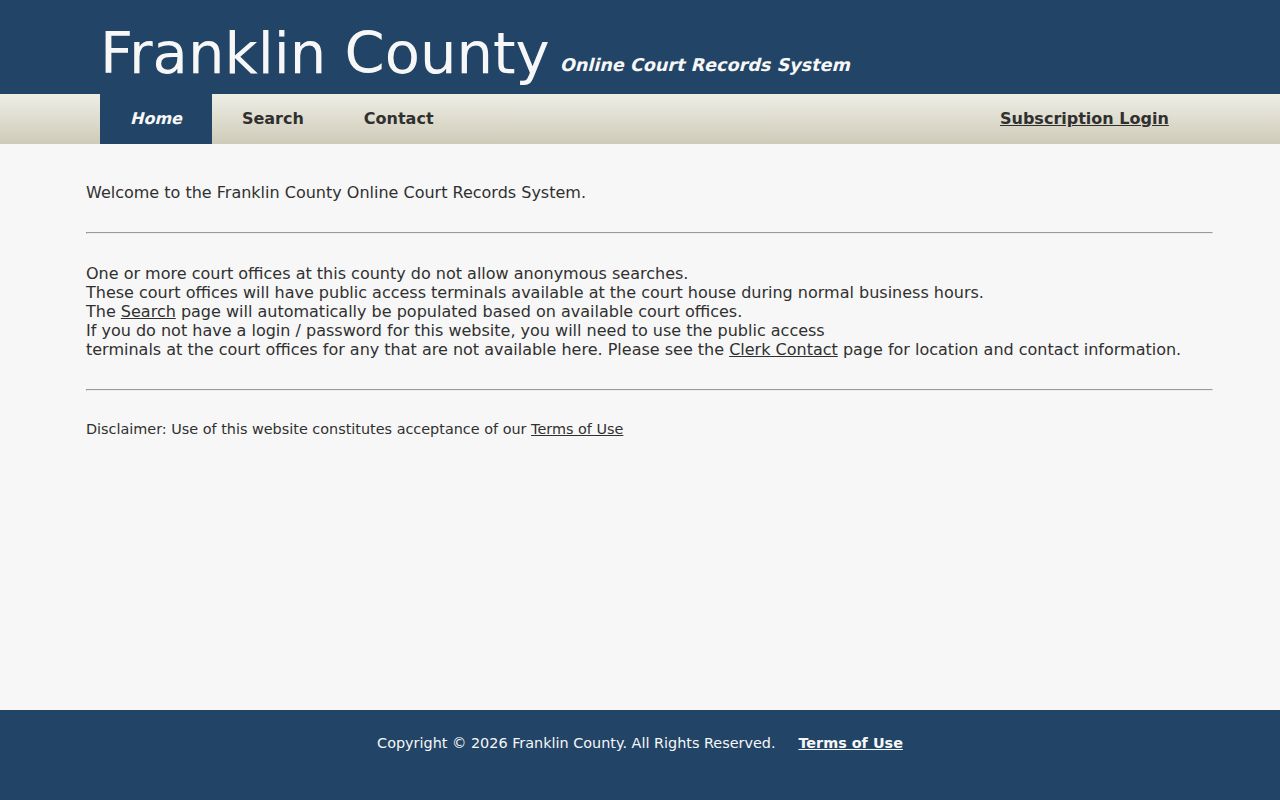
The sign-in requirement explains why exact search fields remain a documented gap.
Case Number Searches
A case number is safer than a common name because it identifies one matter within a court system. Enter it exactly as it appears on a notice, pleading, receipt, citation, or docket. Research did not confirm one Franklin trial-court pattern, so a made-up year and code would mislead. A neutral redacted example is [Franklin case number].
Appellate, trial, municipal, and federal numbers may use different formats. Select the right system first. If TNCIS rejects a known number, check the court, punctuation, and nightly update lag. The clerk can confirm the official identifier.
Free Franklin County Docket Lists
Readers seeking a near-term date may not need TNCIS. The clerk publishes free Circuit criminal and Circuit civil PDFs. General Sessions also posts preliminary criminal and civil lists. They offer date and document links, not a query form.
Sessions preliminary dockets are normally posted around noon the day before court and may change. Ask the clerk for an earlier list. A PDF proves only what was scheduled when published; the register or signed order is needed for the outcome.
Case Search Results Explained
Results vary by source. TNCIS advertises broad event and financial fields, while free PDFs show a date-centered schedule. Public Case History can link appellate motions, orders, judgments, and opinions. Each entry is an index to official records, not a full account of the dispute.
| Case number | The court identifier; formats differ by system. |
|---|---|
| Style or parties | The caption, which cannot alone identify a person. |
| Events | Filings, service, hearings, or entries supported by the source. |
| Setting | A planned event that may later move. |
| Disposition | An outcome to verify against the file or clerk. |
Franklin County Appellate Searches
Tennessee's Public Case History covers the Supreme Court, Court of Appeals, and Court of Criminal Appeals. It offers case number, case style, party name, and organization controls. Coverage applies to appeals with records filed after September 1, 2006. Linked documents are generally available after August 26, 2013, and data runs through the prior business day.
The official interface displays the appellate search controls.
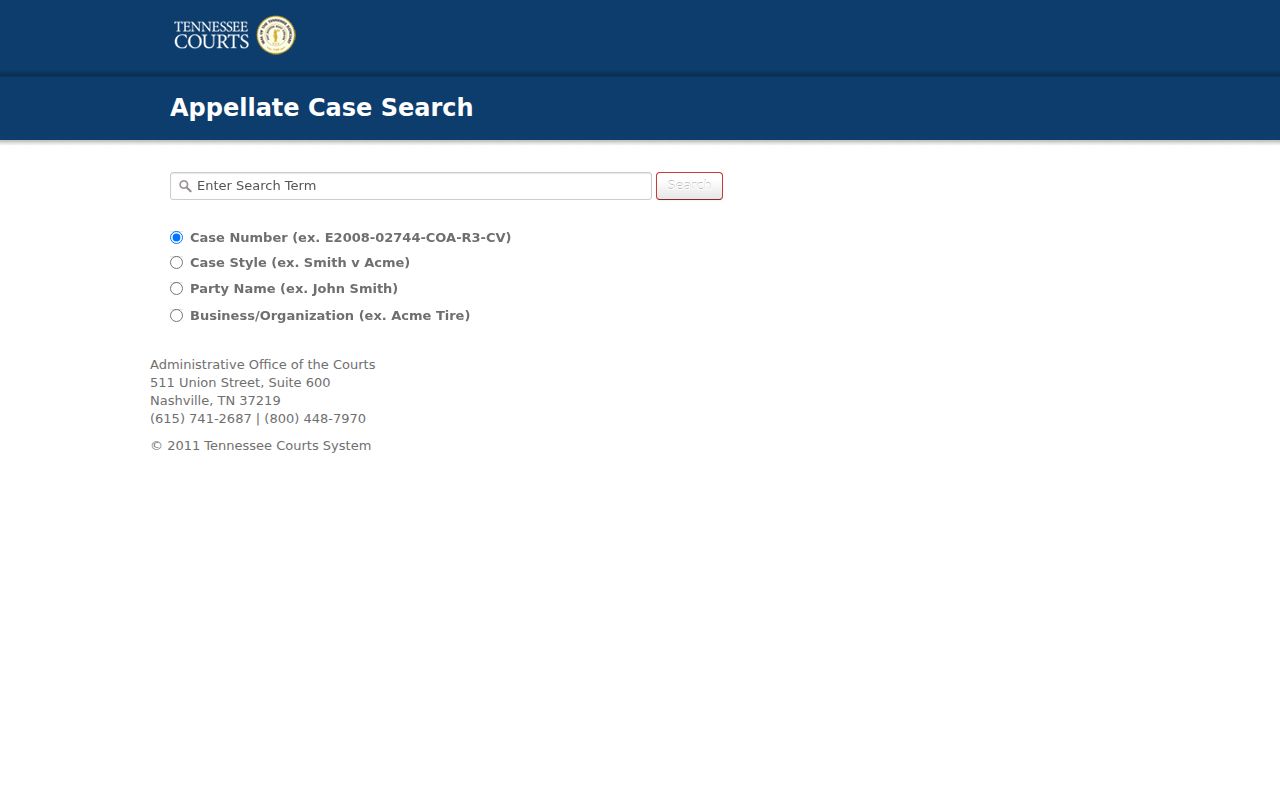
This is the right layer after a local case reaches an appellate court, not a substitute for the Franklin trial record.
Two Ways to Search: County and State
“Statewide” needs care in Tennessee. Franklin TNCIS is a county subscription endpoint for participating trial-court information. Public Case History is statewide but appellate only. Neither replaces local schedule PDFs, city citation systems, or PACER.
| Tennessee Appellate PCH | Franklin TNCIS |
|---|---|
| Three Tennessee appellate courts | Advertised Circuit and Sessions information |
| Number, style, party, organization | Post-login controls unconfirmed |
| Prior-business-day data | Nightly update at 8 p.m. |
Franklin County Federal Case Search
Federal cases use PACER, not county systems. PACER provides court, case, party, report, and document access with an account. Access is $0.10 per page, generally capped at $3 per document except transcripts. Audio is $2.40. Quarterly charges of $30 or less are waived, and courthouse terminals offer free viewing.
The official pricing page displays those rules.
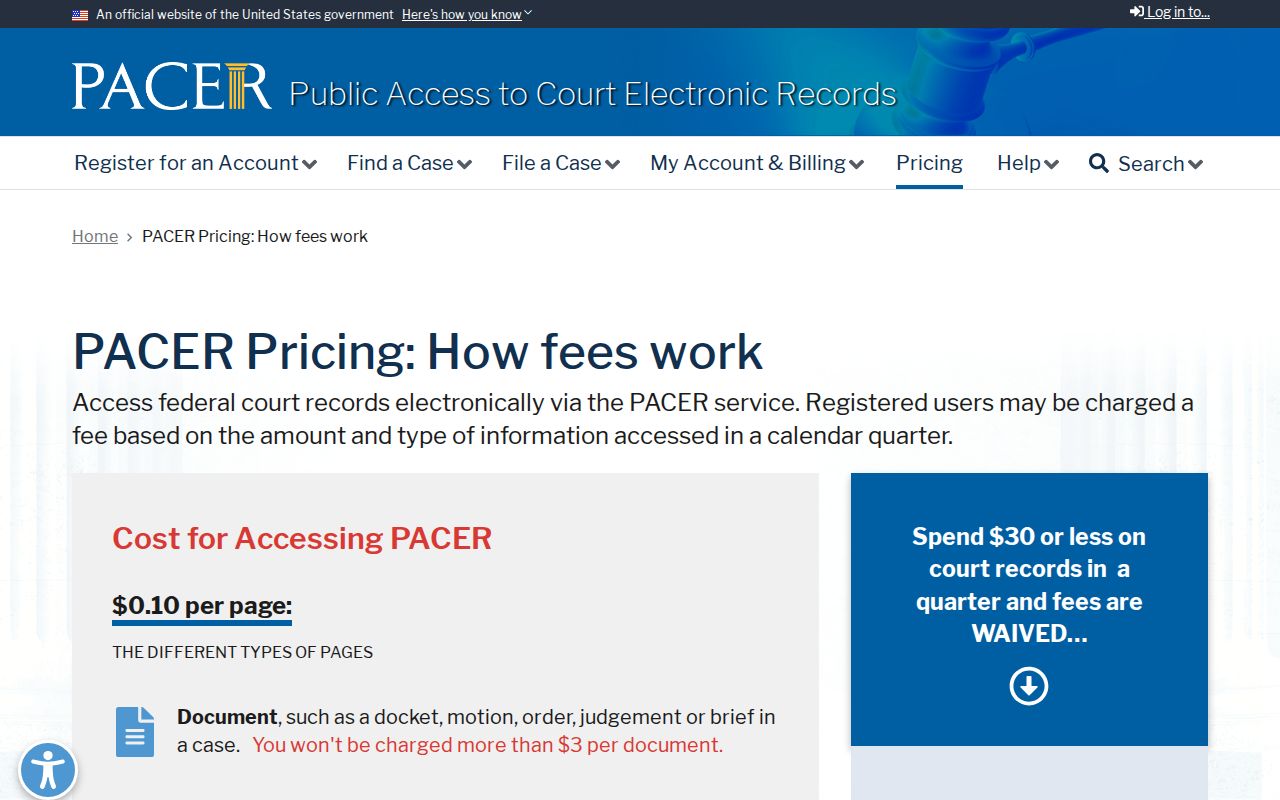
Eastern District CM/ECF is a controlled filing system. Public users normally reach federal docket content through PACER.
Franklin County Search Update Times
Freshness varies across the local, state, and federal systems. Franklin TNCIS reports an 8 p.m. nightly update. Appellate Public Case History runs through the end of the prior business day. General Sessions preliminary PDFs are commonly posted near noon on the day before court, then can change. A bankruptcy hearing docket is posted five days ahead and is not revised afterward.
These cycles explain why two official sources can look different without either being a complete live feed. When a filing or reset is recent, note the source's update rule and call the responsible clerk. A payment portal is not proof that a disposition is final, and a blank calendar is not proof the case has no future event.
Franklin County Municipal Search Limits
Winchester, Estill Springs, Decherd, Cowan, and Huntland operate municipal courts for city-code and traffic matters. Their city pages and payment vendors are separate from Franklin TNCIS. A municipal citation therefore does not automatically belong in a Circuit or General Sessions search.
Start with the issuing city shown on the citation. A vendor screen may support a ticket payment without offering a public case register. Stable field inventories were not confirmed for the Winchester payment portal, Decherd GovernmentWindow, or Cowan JusticeOne. Do not enter another person's citation merely to test a portal. Call the city court clerk when the public labels are unclear.
Franklin County Search Cross-Checks
A sound cross-check uses the court, number, date, and record type together. First compare the notice or pleading with the selected portal. Next see whether a docket PDF lists the relevant date. Then ask for the filed order or certified record if the result affects the person's own case. The Franklin County court case records route explains how to request the documents behind a docket.
Search takeaway: A name match, schedule entry, payment screen, and final order are four different forms of information. Verify the exact record needed.
Never infer facts from a shared name. Public access supports case tracking and public understanding, but source limits and confidentiality rules still apply.
Franklin County Docket Terms
A search result is easier to use when its event words are read narrowly. A setting is a planned event. A reset or continuance moves it. A filing records that a document entered the file, not that the judge granted its request. A disposition states an outcome and should be checked against the final order.
- Case register
- The chronological filing and event history.
- Rule docket
- A TNCIS category whose exact display must be confirmed after login.
- Execution docket
- An advertised enforcement-related category that should not be interpreted without the file.
- Part
- A Circuit judge assignment, not a separate county.
These distinctions keep a Franklin County docket search focused on what the official entry actually says.
Which Cases Stay Restricted
Tennessee Supreme Court Rule 34 presumes access to court public records but recognizes statutory, rule-based, and court-ordered limits. Sealed documents, protected data, drafts, judicial work product, and internal case-management material may be absent. A missing result is not proof that no case exists.
Juvenile Rule 114 closes dependency and neglect records. Delinquent and unruly matters may be open, but a court can close them on a finding of prejudice. Expungement can also alter public availability. Seek lawful access from the custodian.
The absence of a once-public entry can reflect a seal, correction, retention practice, or source limit. Do not fill that gap with an inference. The clerk can explain the request route but may not disclose why protected data is hidden. A public appellate opinion is different from restricted trial material and must be read in its own procedural setting.